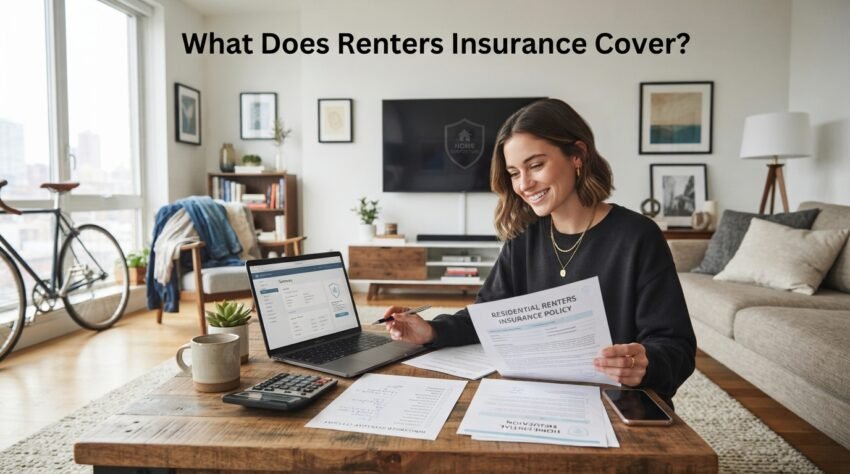
Renting a home or apartment comes with financial responsibilities that go beyond monthly rent. While a landlord’s insurance policy generally protects the building itself, it typically does not cover a tenant’s personal belongings or personal liability.
That is where renters insurance can help.
Renters insurance is designed to provide financial protection for eligible losses involving your personal property, personal liability, and certain additional living expenses. However, coverage varies by policy, and not every type of damage or loss is automatically covered.
Understanding what renters insurance covers, what it excludes, and how much coverage you may need can help you avoid expensive surprises after an unexpected event.
What Is Renters Insurance?
Renters insurance is an insurance policy designed for people who rent a house, apartment, condominium, or other residential property.
A typical renters insurance policy may include three major categories of protection:
- Personal property coverage
- Personal liability coverage
- Additional living expenses coverage
Some policies may also provide additional protections depending on the insurer and policy terms.
Unlike homeowners insurance, renters insurance generally does not insure the physical structure of the building. The landlord is typically responsible for insuring the property itself.
What Does Renters Insurance Cover?
The exact coverage depends on your policy, but renters insurance commonly provides protection for personal belongings against specified covered causes of loss.
1. Personal Belongings
Personal property coverage can help pay to repair or replace covered belongings damaged or destroyed by a covered event, subject to your policy’s deductible, limits, exclusions, and conditions.
Covered belongings may include:
- Clothing
- Furniture
- Electronics
- Computers
- Televisions
- Kitchen appliances
- Books
- Sporting equipment
- Personal accessories
- Certain valuables
For example, suppose a covered fire damages your apartment and destroys your furniture, clothing, and television.
If those items are covered under your renters policy, personal property coverage may help pay for the resulting loss, subject to the policy terms.
2. Theft
Renters insurance may cover personal belongings stolen during a covered theft loss.
For example, if someone breaks into your apartment and steals your laptop, television, and other covered belongings, your renters insurance may help pay for their replacement.
Coverage can sometimes extend beyond your residence, depending on the policy.
For example, personal property coverage may apply to certain belongings stolen from your vehicle or temporarily taken outside your home.
However, limits and special rules can apply to certain categories of property.
3. Fire and Smoke Damage
Fire is one of the common risks covered by many renters insurance policies.
Coverage may apply to personal belongings damaged by:
- Fire
- Smoke
- Certain related damage
For instance, if a kitchen fire causes smoke damage throughout your apartment and damages your clothing and furniture, your policy may provide coverage for eligible personal property losses.
The building itself would generally fall under the landlord’s property insurance rather than your renters policy.
4. Certain Water Damage
Renters insurance may cover certain types of sudden and accidental water damage.
For example, a sudden plumbing failure that damages your personal belongings may be covered depending on the policy.
However, renters insurance generally does not cover every type of water-related loss.
Flooding is typically excluded from standard renters insurance and may require separate flood insurance.
Water damage caused by long-term maintenance problems, seepage, or certain forms of negligence may also be excluded.
Always check the policy language before assuming a water-related loss is covered.
5. Windstorm and Hail
Many renters policies provide coverage for personal property damaged by certain windstorms or hail events.
For example, if severe weather damages a window and rain subsequently damages your belongings, your policy may provide coverage depending on the circumstances and policy terms.
Some geographic areas or policies may have special exclusions or deductibles for particular weather-related risks.
6. Vandalism
If covered vandalism damages your belongings, renters insurance may help pay for eligible losses.
For example, if someone intentionally damages your furniture or other covered personal property during a covered incident, your policy may respond subject to its terms.
7. Personal Liability
Renters insurance is not only about your belongings.
Personal liability coverage can help protect you financially if you are legally responsible for causing bodily injury to another person or damage to someone else’s property, subject to the policy terms and limits.
For example, suppose a visitor slips inside your rented apartment and claims that you were responsible for the injury.
Your renters policy may provide liability coverage for eligible claims.
Liability coverage may also help with certain legal defense costs, depending on the policy.
This is an important reason not to dismiss renters insurance simply because you do not own expensive furniture or electronics.
8. Additional Living Expenses
Another important renters insurance benefit can be additional living expenses, sometimes called loss-of-use coverage.
If a covered event makes your rented home temporarily uninhabitable, your policy may help pay certain additional costs while you live elsewhere.
Depending on the policy, covered expenses may include:
- Temporary accommodation
- Additional food expenses
- Transportation costs
- Other necessary increases in living expenses
For example, if a covered fire makes your apartment unsafe to occupy, your renters insurance may help with eligible temporary living expenses while repairs are completed.
The coverage has limits, so review your policy carefully.
What Does Renters Insurance Not Cover?
Understanding exclusions is just as important as understanding coverage.
A standard renters policy generally does not cover every possible cause of loss.
Common exclusions can include:
- Flood damage
- Earthquake damage
- Normal wear and tear
- Certain pest-related damage
- Intentional damage
- Certain maintenance-related problems
- Some high-value property beyond specified limits
The exact exclusions depend on the policy.
Flood Damage
Standard renters insurance generally does not cover damage caused by flooding.
If you live in an area with significant flood risk, consider whether separate flood insurance is appropriate.
Flooding can occur even when you do not live near a major river or coastline, so location-specific risk should be evaluated carefully.
Earthquake Damage
Earthquake damage is commonly excluded from standard renters policies.
Separate earthquake insurance may be available in some areas.
If you live in an earthquake-prone region, ask an insurance professional about available coverage options.
Normal Wear and Tear
Insurance is designed to protect against covered unexpected losses, not routine deterioration.
For example, renters insurance generally would not pay to replace a sofa simply because it has become old or worn out.
Pest Damage
Damage caused by insects, rodents, termites, or other pests may be excluded.
Renters are generally responsible for ordinary maintenance issues according to the rental agreement, while landlords may have responsibilities for structural or property-related problems.
The exact responsibility depends on the lease and applicable local law.
Actual Cash Value vs. Replacement Cost
One of the most important decisions when purchasing renters insurance is understanding how your personal property will be valued after a covered loss.
Two common approaches are actual cash value and replacement cost.
Actual Cash Value
Actual cash value generally considers depreciation when determining the value of damaged or destroyed property.
For example, if you bought a television several years ago for $1,000, its current value may be substantially lower because of depreciation.
Your insurer may therefore calculate the claim using the property’s depreciated value, subject to the policy terms.
Replacement Cost
Replacement cost coverage generally aims to provide the amount needed to replace covered property with a comparable new item, subject to the policy’s terms and limits.
Because replacement cost coverage can provide broader protection for personal property, it may cost more than actual cash value coverage.
When comparing renters insurance policies, do not look only at the premium. Check how the insurer values your belongings.
How Much Renters Insurance Do You Need?
There is no universal coverage amount that works for every renter.
Start by estimating the total value of your belongings.
Walk through your home and create an inventory of:
- Clothing
- Furniture
- Electronics
- Appliances
- Jewelry
- Computers
- Sporting equipment
- Musical instruments
- Other valuable possessions
You may be surprised by how quickly the total replacement cost adds up.
For example, replacing an entire wardrobe, bedroom furniture, laptop, smartphone, television, kitchen equipment, and other belongings could cost significantly more than expected.
Create a Home Inventory
A home inventory can make it easier to determine how much coverage you need and can also help if you need to file a claim.
Record:
- Item name
- Approximate purchase date
- Purchase price
- Current estimated value
- Serial number, when applicable
- Photos or videos
- Receipts, if available
Store the inventory somewhere you can access even if your home is damaged.
Cloud storage or another secure location can be useful.
What About Expensive Jewelry and Other Valuables?
Renters insurance may cover valuable items such as jewelry, watches, collectibles, firearms, or certain electronics, but policies often impose special sublimits for specific categories.
For example, a policy may provide a relatively low limit for stolen jewelry even though your overall personal property limit is much higher.
If you own expensive items, ask your insurer about:
- Special limits
- Scheduled personal property
- Additional coverage
- Appraisals
- Documentation requirements
Do not assume that a $20,000 personal property limit means every individual item is automatically covered for its full value.
Does Renters Insurance Cover a Roommate?
Usually, you should not assume that your roommate’s belongings are automatically covered under your policy.
Whether roommates can share a renters insurance policy depends on the insurer and policy structure.
If you live with roommates, each person should understand:
- Whose name is on the policy
- Who is insured
- Whose belongings are covered
- Whether liability coverage applies to everyone
- Whether separate policies are recommended
Having separate renters insurance policies may be the simplest solution in many roommate situations.
Does Renters Insurance Cover a Landlord’s Property?
Generally, renters insurance is intended to protect the tenant’s covered property and liability rather than the landlord’s building.
The landlord typically has separate insurance for the structure.
However, if you accidentally cause covered damage to the landlord’s property, your liability coverage may potentially respond depending on the circumstances and policy terms.
This is one reason liability coverage deserves attention when comparing renters policies.
Does Renters Insurance Cover Temporary Accommodation?
It can.
If a covered event makes your rented home uninhabitable, additional living expenses coverage may help pay certain necessary additional costs while you are temporarily displaced.
For example, if a covered fire forces you to leave your apartment, your policy may help with eligible temporary accommodation and other covered additional expenses.
Coverage limits and eligibility requirements vary, so read the policy carefully.
How Much Does Renters Insurance Cost?
Renters insurance is often relatively affordable compared with many other forms of insurance, but the actual premium depends on factors such as:
- Location
- Coverage limits
- Deductible
- Claims history
- Property characteristics
- Coverage options
- Insurance company
- Selected endorsements
A higher deductible may reduce your premium, but it also means you could pay more out of pocket after a covered claim.
The cheapest policy is not necessarily the best policy.
Compare coverage, exclusions, limits, deductibles, and insurer reputation alongside the price.
How to Choose the Right Renters Insurance Policy
Before purchasing a policy, compare the following factors.
Coverage Limits
Make sure the personal property limit is high enough to replace your belongings.
Deductible
Choose an amount you could realistically afford after a covered loss.
Liability Coverage
Consider whether the liability limit provides appropriate protection for your circumstances.
Replacement Cost
Determine whether the policy uses actual cash value or replacement cost for personal property.
Additional Living Expenses
Check how much temporary living expense coverage is provided and what conditions apply.
Exclusions
Read the exclusions carefully, especially if you live in an area vulnerable to floods, earthquakes, hurricanes, or other hazards.
Special Limits
Check limits for jewelry, electronics, collectibles, and other valuable property.
What Should You Do After a Loss?
If your property is damaged or stolen, take reasonable steps to protect yourself and prevent additional damage.
Depending on the situation:
- Contact emergency services if necessary.
- Take photographs or videos of the damage.
- Protect property from further damage when it is safe to do so.
- Report theft to the appropriate authorities.
- Notify your insurance company promptly.
- Keep receipts for eligible temporary expenses.
- Prepare an inventory of damaged or stolen property.
- Keep copies of documents related to the claim.
Do not discard severely damaged items before discussing the situation with your insurer unless they pose a safety hazard or you are instructed to do so.
Final Thoughts
Renters insurance can provide valuable financial protection for people who do not own the property they live in. A typical policy may protect covered personal belongings, provide personal liability coverage, and help with certain additional living expenses after a covered loss.
However, renters insurance does not cover everything. Floods, earthquakes, normal wear and tear, maintenance problems, and other exclusions may require separate coverage or may not be covered at all.
Before purchasing a policy, determine the value of your belongings, review coverage limits, understand the deductible, check exclusions, and find out whether valuable items require additional protection.
Most importantly, read the policy rather than relying on assumptions. Insurance coverage is defined by the actual contract, including its limits, exclusions, conditions, and endorsements.
Frequently Asked Questions
Does renters insurance cover theft?
Many renters insurance policies cover theft of covered personal property, subject to the policy’s limits, deductible, exclusions, and conditions.
Does renters insurance cover water damage?
It may cover certain sudden and accidental water damage, depending on the cause. Standard renters insurance generally does not cover flooding.
Does renters insurance cover my landlord’s building?
Generally, the landlord’s insurance covers the building itself. Your renters insurance is primarily designed to protect your personal property and provide liability coverage.
Is renters insurance required?
Some landlords require tenants to maintain renters insurance as a condition of the lease. Even when it is not required, renters insurance can provide useful financial protection.
Does renters insurance cover a roommate’s belongings?
Not necessarily. Coverage for roommates depends on the insurer and policy. Each roommate should confirm who is insured and whose property is covered.
Does renters insurance cover a hotel if my apartment becomes unlivable?
If a covered event makes your rental uninhabitable, additional living expenses coverage may help pay certain temporary accommodation costs, subject to the policy’s limits and conditions.